
A med spa in Scottsdale writes on its website that its laser treatment “permanently removes all wrinkles with zero downtime.” A competitor files a complaint, and a patient who expected perfect results leaves a scathing review. The spa’s owner realizes the claim was never something she could support.
Health and wellness businesses work in a field where marketing claims face close scrutiny. Accurate descriptions protect patients, your reputation, and your business.
Who Regulates Health Marketing
The Federal Trade Commission requires that health claims in advertising be truthful and supported by competent and reliable scientific evidence. The FDA regulates drugs and medical devices, including how some products can be described. State medical boards and other agencies set rules for who can perform treatments and how practices advertise.
Rules differ by treatment and state. A med spa offering injectables, laser treatments, or weight-loss services should understand which rules apply before writing marketing copy. Regulators and competitors both pay attention to bold health claims, and so do patients who feel misled.
Claims That Cause Trouble
Words like “permanent,” “guaranteed,” “painless,” and “cure” often create problems because results vary by person. Before-and-after photos should show typical results from real patients who gave consent, without heavy editing. Avoid calling a device or product “FDA approved” unless that is accurate for the specific use, since some devices are cleared rather than approved.
Testimonials must reflect real experiences and follow FTC endorsement rules. If results shown are not typical, that matters to how you present them. Be careful with brand names of products like neurotoxins, since manufacturers often have rules about how you can use them in marketing.
Write Clear, Honest Descriptions
Describe what a treatment is, who typically benefits, how many sessions people usually need, possible side effects, and recovery time. Note that results vary. Name the licensed professionals who perform or supervise treatments. Have a healthcare attorney or compliance advisor review high-risk pages. Keep a record of the evidence behind any claim you publish.
Keep the same accurate language on every platform. Practices listed in the Health and Medical category on Ace of the Web should describe services in their listing using the same careful wording as their website. Consistent, measured descriptions on Ace of the Web and elsewhere help patients form realistic expectations.
Promise Only What You Can Support
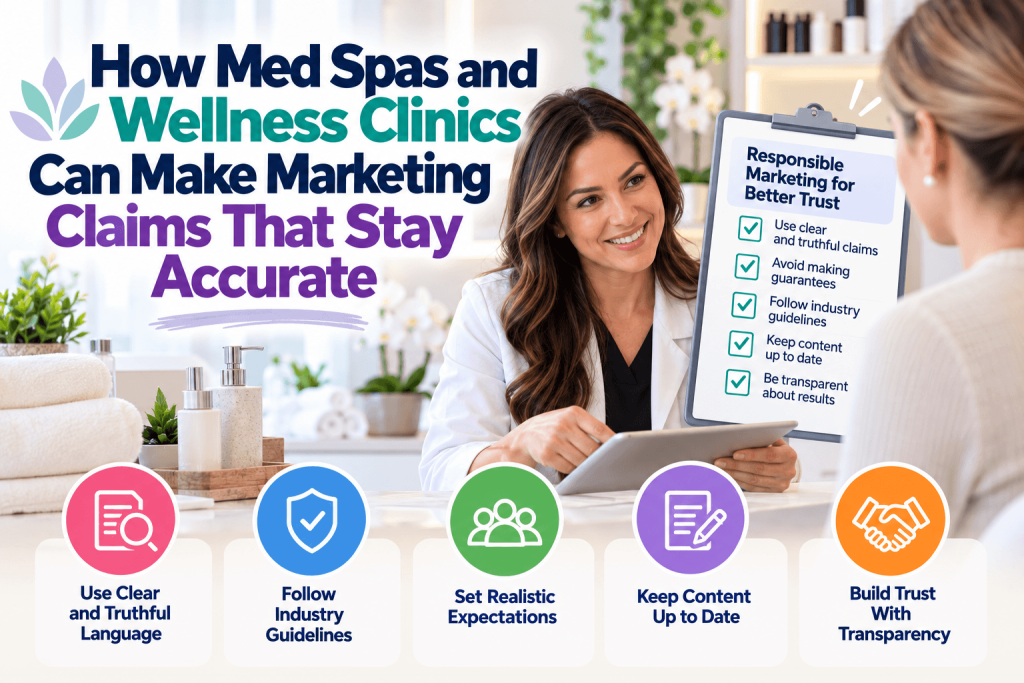
Accurate health marketing protects patients and practices alike. Understand which FTC, FDA, and state rules apply, avoid absolute claims, present testimonials and photos honestly, and describe treatments with realistic expectations. Use the same careful wording on your website and directories like Ace of the Web, and get compliance review for high-risk claims.
Frequently Asked Questions
Can a med spa say a treatment is FDA approved?
Only if that is accurate for the specific product and use. Many aesthetic devices are FDA cleared rather than approved, which is a different process. Use the correct term and check the manufacturer's documentation or an advisor before making the claim.
Are before-and-after photos allowed in health marketing?
Generally yes, with patient consent and honest presentation. Photos should show real results without misleading edits, and you should avoid implying that every patient will see the same outcome. State rules may add requirements, so check before publishing. Get written consent for every photo.
What makes a health claim misleading under FTC rules?
A claim may be misleading if it is not supported by competent and reliable scientific evidence or if it creates a false impression, even when technically true. Absolute words like "guaranteed" or "cure" often raise concerns. Results that vary should be described that way.
Should a wellness clinic have an attorney review its website?
For clinics offering medical treatments, injectables, or health-related products, a review by a healthcare attorney or compliance advisor is a sensible precaution. It helps catch claims that could create regulatory or legal risk before patients or regulators see them. Review pages again when services change.